Whale Sanctuary in the Southwest Coast of Tenerife
By @marinatortosa27 / @aguitasubmarina
An archipelago in the middle of the Atlantic Ocean has to be, by force, a good place for the sighting of a great number of cetacean species, among them, whales. Diverse migratory routes, depths of up to 3000 meters, marine currents, tropical climate, warm and calm sea… all these factors help these extraordinary marine mammals to visit and choose Tenerife’s waters as a place of passage, destination and home. From BIOSEAN: Whale Watching and Marine Science we want to introduce you to the world of whales and accompany you to live an unforgettable experience… do you want to know more?
Keep reading!
Tenerife, named a Whale Heritage Site by the World Cetacean Alliance
The geographical position of the Archipelago, its volcanic origin, the transparency and temperature of its waters and the constant influence of several marine currents are some of the factors responsible for the great biodiversity that the Canary Islands host. The richness of the seabed is a powerful attraction for large marine mammals, which come close to the islands attracted by the variety of food and nutrients they find.

More than a third of the cetacean species known in the world have been sighted in the marine waters surrounding Tenerife and La Gomera. For this reason, both islands have recently been distinguished as a Whale Heritage Site by the World Cetacean Alliance (WCA), an international organization that works to protect whales, dolphins and porpoises, fighting against the captivity and exploitation of cetaceans. This distinction is the first to be awarded in Europe and the third in the world, after Hervey Bay (Australia) and The Bluff (South Africa). The same organization also awarded BIOSEAN: Whale Watching and Marine Science the certification of responsible whale and dolphin observers, the only international label that distinguishes cetacean watching organizations that “operate with the highest standards of care for local wildlife, sustainability and customer experience.” So, if you want to embark on an adventure to meet these incredible animals, but you want to do it in a respectful and sustainable way… we are definitely your team!
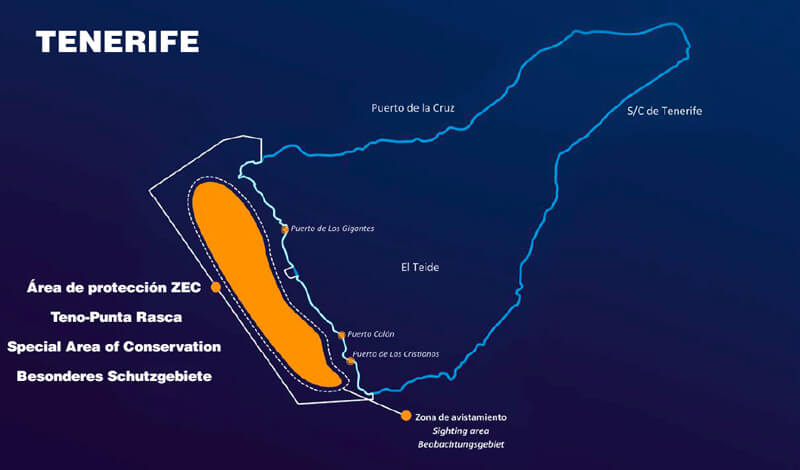
The home of these cetaceans is located in the marine strip previously designated in 2011 as a Special Area of Conservation (ZEC) by the Natura 2000 Network, which runs from El Fraile, in Teno, to the tip of Rasca, in Las Galletas, covering about 22 kilometres in length. In this area not only a great number of resident species of cetaceans, seabirds, turtles and elasmobranchs (sharks and rays) live, but it is also part of an important migratory route for baleen whales and sperm whales. During practically the whole year, different species of migratory whales can be observed on the southwest coast of Tenerife: Bryde’s whales, fin whales, humpback whales, northern minke whales, blue whales and minke whales, ordered by frequency of sightings. It is no coincidence that National Geographic has recently listed the Canary Islands as one of the ten best places in the world to see whales in their natural environment.
Haven’t we convinced you yet to come and meet them?
The tireless marine travellers par excellence
Few sensations are comparable to seeing a whale swimming freely. Their size and majesty, together with the calmness and composure with which they take their deep breaths, can make anyone feel small… But what do we really know about these great animals?
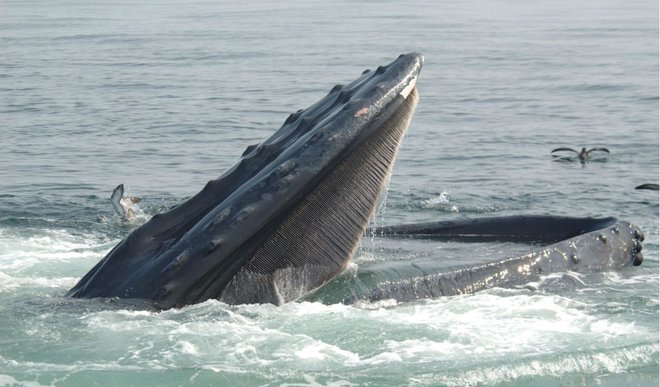
They are mammals belonging to the order of cetaceans, which also includes dolphins and porpoises. In general, people tend to call “whale” any large cetacean, but this is not entirely correct. True whales have baleen, unlike dolphins, sperm whales or orcas, which have jaws with teeth. Baleen is essential for the feeding of whales. While they swim, they fill their huge mouths with water and, with the help of the muscles in their throat and tongue, push the water out, keeping only the food trapped between the baleen plates. You could say they travel with a huge comb in their mouths that continuously filters the ocean water. They can have between 100 and 400 baleen plates depending on the species!
Don’t forget that they are mammals, and the presence of lungs instead of gills limits their ability to breathe underwater. Instead, they come to the surface every so often to breathe through their nostrils, called blowholes, which are located on the top of the head. Generally, whales have two blowholes, while the rest of the toothed cetaceans have only one.
Did you know that whales sing to communicate?
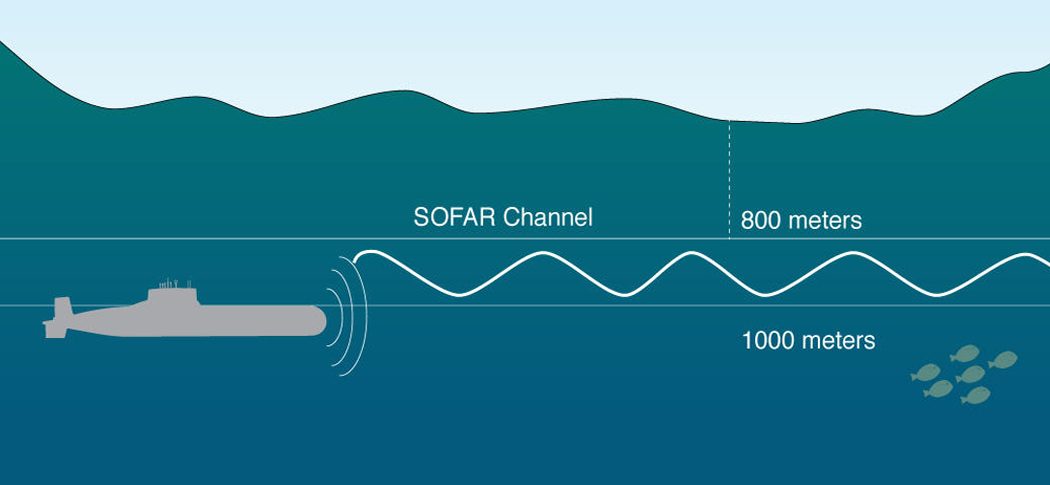
Unlike other cetaceans, whales lack the structure needed for echolocation, which we talked about in one of our previous articles. Instead, they emit a series of grunts, whistles and howls underwater at low frequency, capable of travelling long distances. Specifically, they do so through a region of the water column known as the SOFAR channel, which acts by rapidly dispersing sounds. They are capable of creating real songs! In fact, many artists have drawn inspiration from their melodies to create their own sound pieces.
But if whales are known for anything, it is for their long migrations of thousands of kilometres, from one end of the planet to the other. Except for Bryde’s whales, which remain in warm waters all year round, all baleen whales carry out north-south and south-north migrations in search of the best breeding and feeding grounds. During the breeding and calving season, which takes place in winter and spring, they live in warm waters. When summer arrives, they migrate to cold waters in search of food, when the ice in polar regions melts and creates an explosion of life. Their favourite delicacies, krill and copepods (small crustaceans), become available in large quantities, almost like an all-you-can-eat buffet.
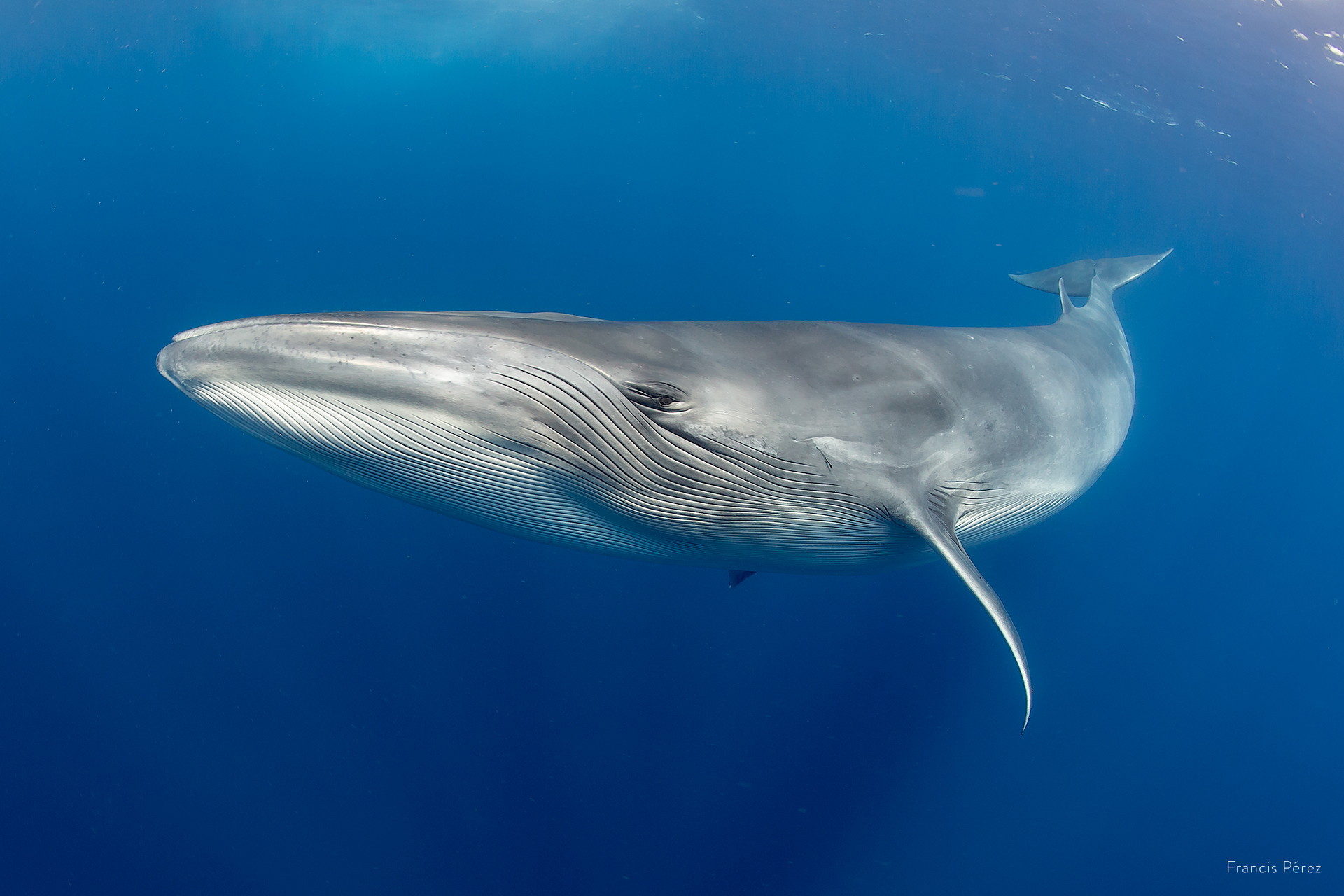
Although baleen whales are known as migratory species, Bryde’s whale is considered a sporadic species in Tenerife, meaning it is a regular visitor to the archipelago throughout the year. Others, such as the fin whale and the northern minke whale, are seasonal and arrive in Tenerife at the beginning of summer. The Asociación Tonina, with which BIOSEAN collaborates, has a detailed photo-identification catalogue of fin whales sighted on the island, and we encourage you to take a look at it!
Next, we would like to tell you about the visiting whale species that, with a bit of luck, you may be able to see on one of our boat trips. Still, we must not forget that we are in the natural environment of these cetaceans, a sanctuary and not a zoo. It depends on the animals themselves whether they choose to show themselves or not. But isn’t that exactly what makes these trips so special?
Main whale species in Tenerife
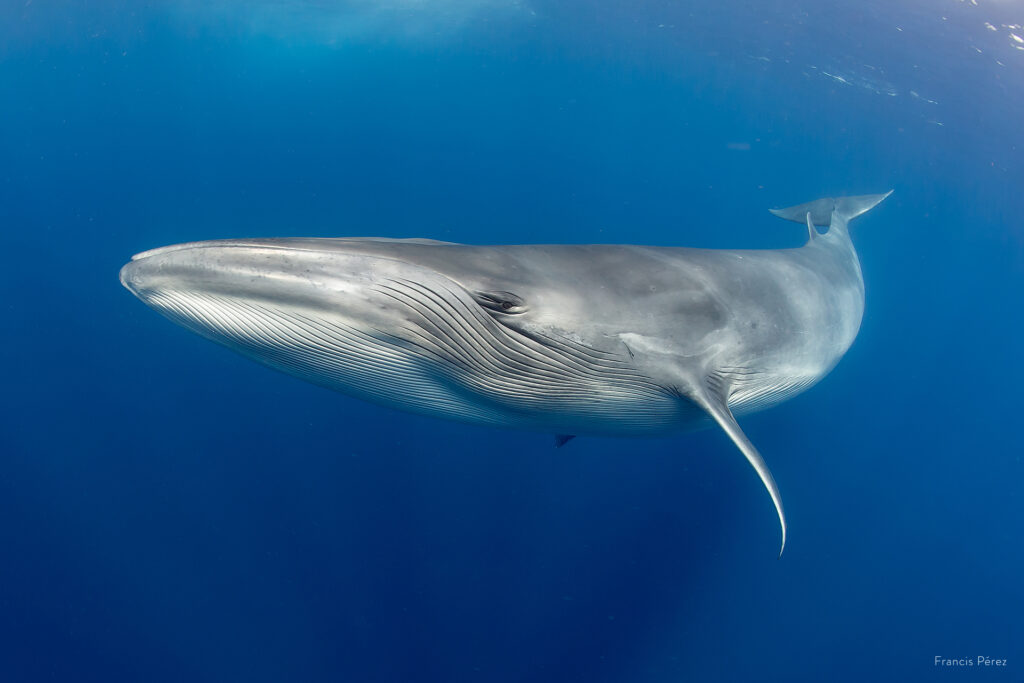
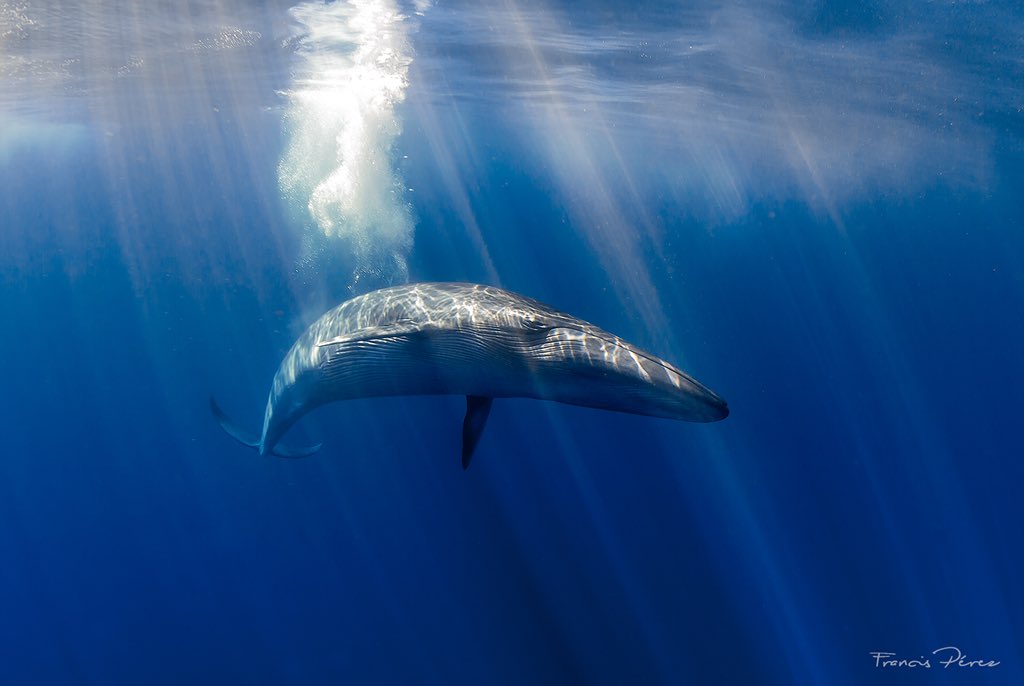
Bryde’s whale (Balaenoptera edeni): This is the most common whale species on our whale-watching trips. It can be distinguished from other whale species by its dark bluish-grey back compared to its light throat and belly. It also has three dorsal ridges in the space between the blowhole and the tip of the head. It is the second smallest rorqual, with an average length of 12 metres.
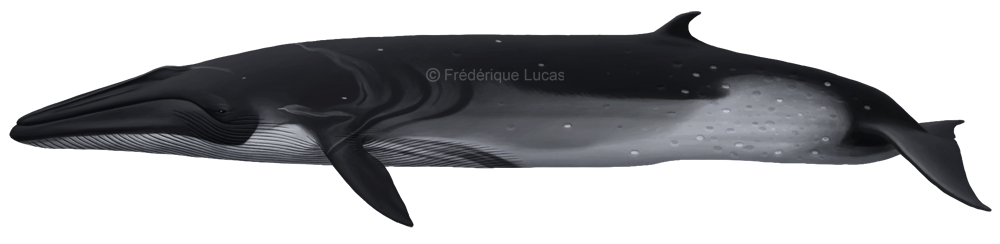
Fin whale (Balaenoptera physalus): This whale, which can reach 27 metres in length, is the second largest animal on the planet, after the blue whale (Balaenoptera musculus). So if you come across one on one of our tours, we promise it will be quite a spectacle!

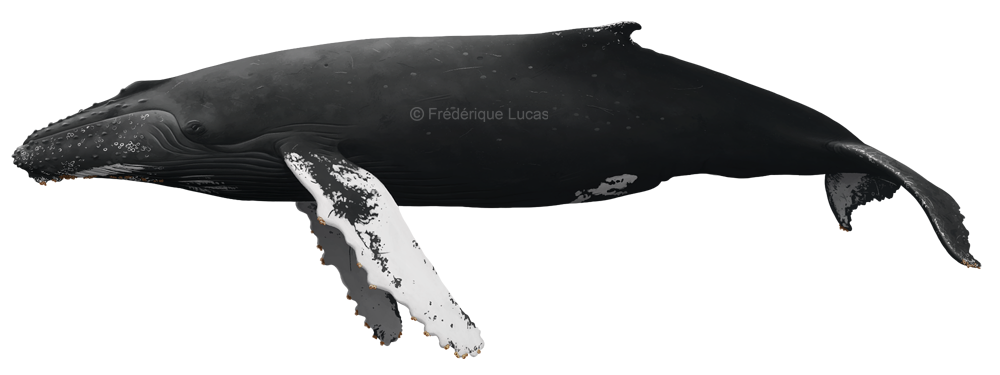
Humpback whale (Megaptera novaeangliae): Found in almost all the oceans and seas of the world. It is known for its large pectoral fins, which can reach up to 5 metres… they look like real wings! Its name refers to its characteristic habit of arching its back before diving. They can reach 18 metres in length and weigh 40 tonnes.
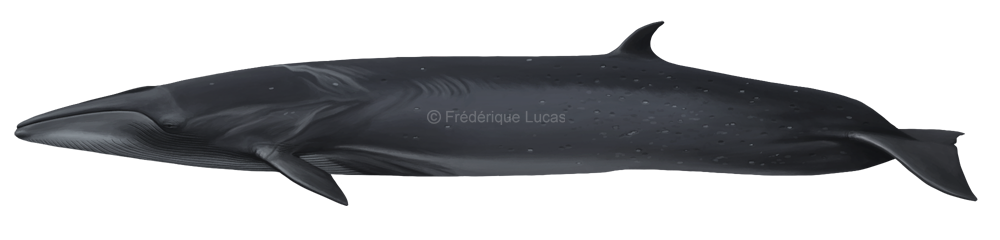
Northern minke whale (Balaenoptera borealis): At 16 metres long and 30 tonnes in weight, experts distinguish it from other whales by its diving sequence. It has a relatively slender body, dark grey on the back and light grey on the belly. The dorsal fin is a little further forward than in most rorquals, but still in the rear half of the back.
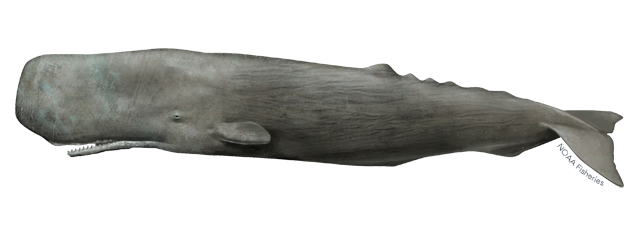
Sperm whale (Physeter macrocephalus): Remember that the sperm whale is not a whale! It is a cetacean that has teeth instead of baleen. The sperm whale has ridged skin, a giant head and a very small dorsal fin in relation to its body. Some individuals weigh up to 60 tonnes and reach 18 metres in length. In addition, the sperm whale is a true natural diver: it can dive for up to 60 minutes to meet its feeding needs.
If you want to discover the marine treasures of Tenerife’s waters, join us and enjoy an incredible and sustainable experience. You can check our activities and read more articles like this on the BIOSEAN website. Find out why we are internationally certified for whale watching in Tenerife by visiting our social media channels: YouTube, Facebook, Instagram, Twitter and LinkedIn.
See you soon!