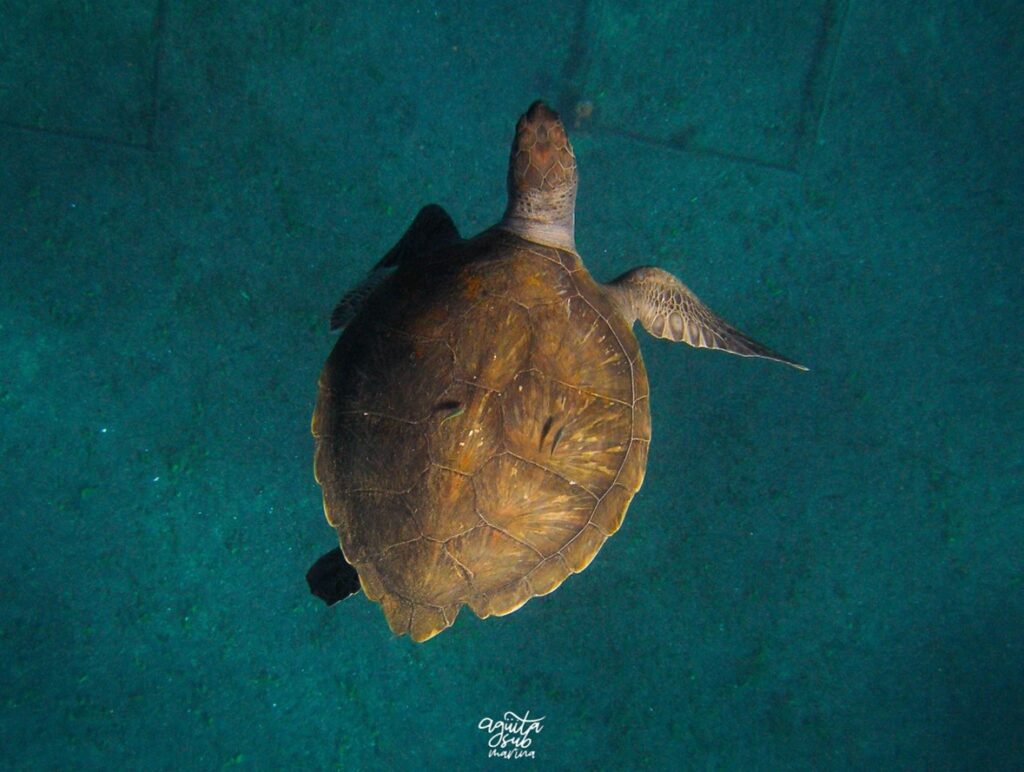
Sea turtles of Macaronesia
By Marina Tortosa (@aguitasubmarina)
There is something undeniably majestic and special about the slow, measured movement of a turtle. This marine animal, capable of travelling thousands of kilometres between continents throughout its life, captivates us and fills our curiosity, inspiring legends and mythological symbols in many cultures.
More than 150 million years later, sea turtles are still inhabiting the planet and have managed to survive all kinds of ecological adversity. They are one of the great symbols of Macaronesian culture and biodiversity. Their role in the ecosystem is essential, but their survival is being affected by habitat degradation, entanglement and bycatch, and plastic pollution. However, it is not too late yet. Sea turtles have an important story to tell.
Are you ready to discover it?
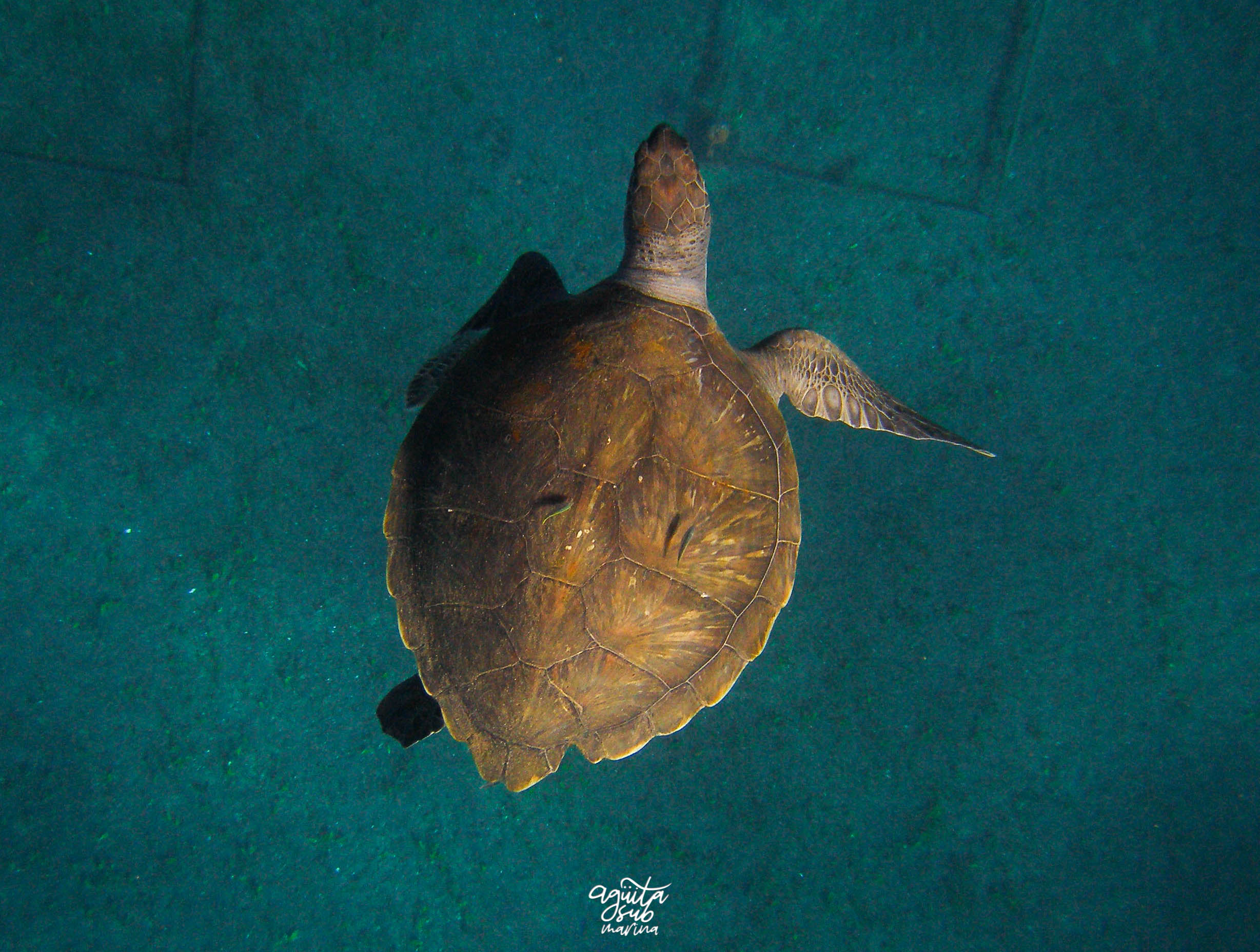
The Canary Islands: a true turtle hotspot
The first known turtle fossils date back 220 million years. Today, two families and seven species of sea turtles are known worldwide, and we introduce them here.
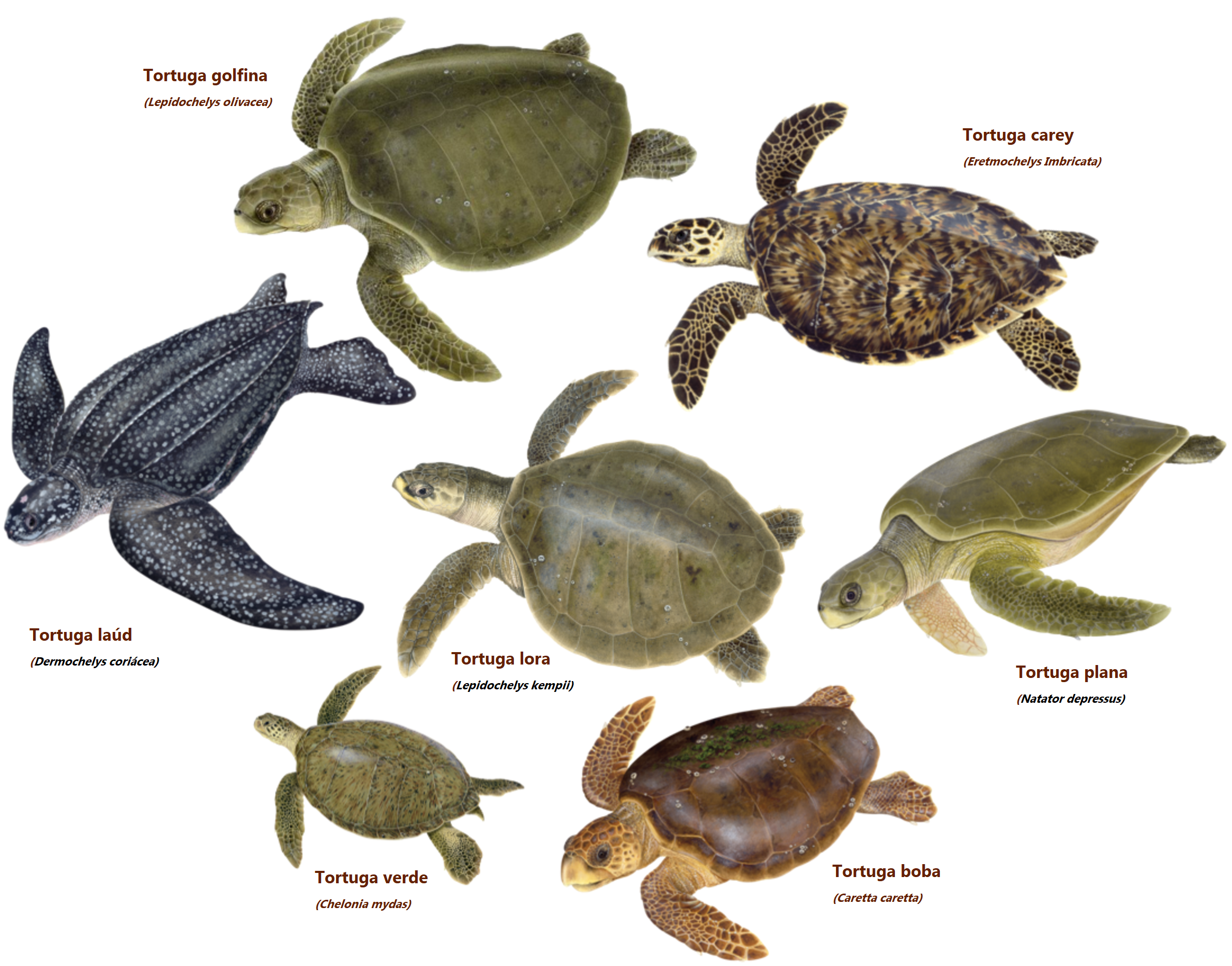
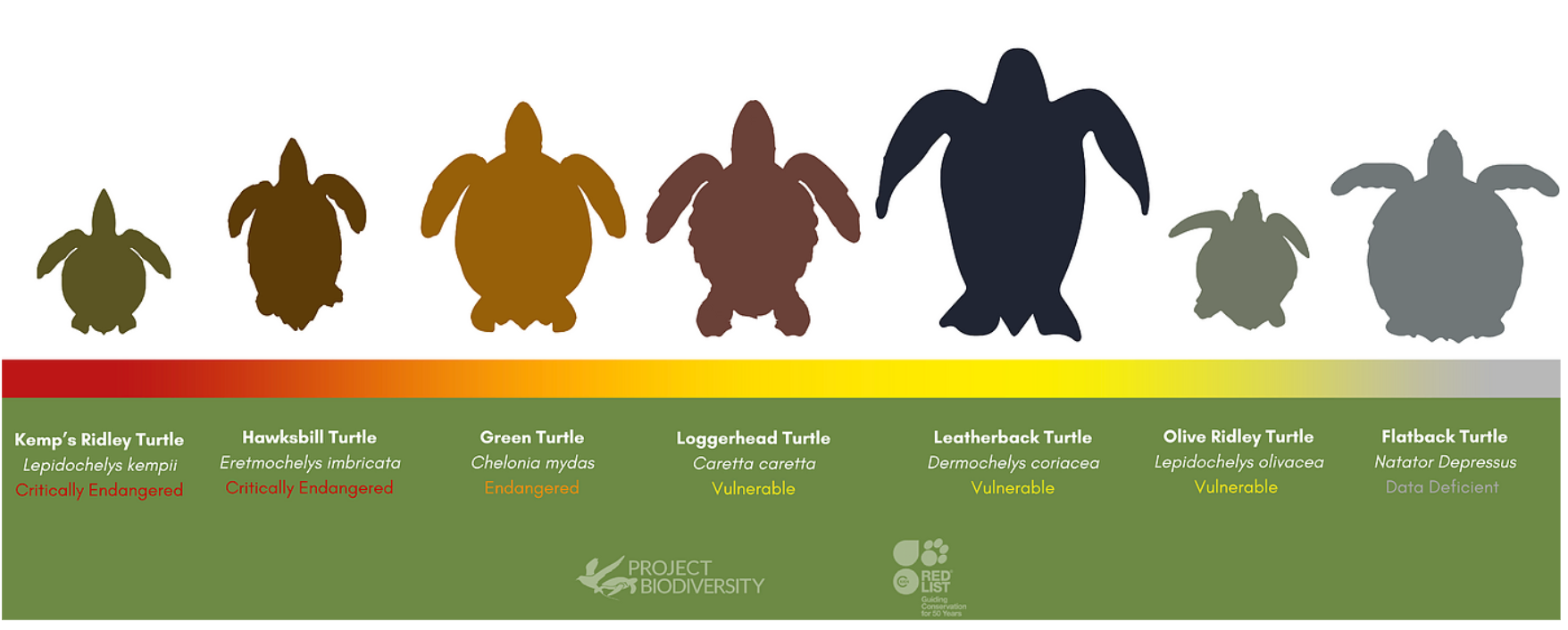
These species are identified and distinguished according to their morphological features. The most commonly used are the number of lateral scutes on the shell, the presence or absence of claws, and the number of prefrontal scutes. Of the seven sea turtle species, six can be seen with varying frequency in Canarian waters: loggerhead turtle, green turtle, leatherback turtle, hawksbill turtle, olive ridley turtle and Kemp’s ridley turtle, although records of the last two are highly occasional. Of all sea turtle species, the loggerhead turtle is the most frequent in the Canary Islands, followed by the green turtle.
Sea turtles are present in practically all ocean basins around the world, depending on the time of year. In the Canary Islands their presence is constant because of the archipelago’s geographical position. They are located on the descending branch of the Gulf Stream, the terrestrial equivalent of a great wildlife highway for animals that use ocean currents as their main means of transport, such as sea turtles.
A lifetime of migration through ocean currents
The long life of sea turtles begins on land. Although they are marine animals, we must not forget that they are reptiles: female turtles must return to the beaches to build their nests and bury their eggs. As with other reptile species, the sex of the hatchlings depends on the average incubation temperature of the eggs. Below 27.7ºC, the eggs hatch into males, while above this temperature the hatchlings will be females. After a few months, the hatchlings emerge and head towards the shore. During this seemingly short journey, they must face the predation and attacks of many animals, such as crabs and birds. Those that overcome all obstacles reach the water and begin their marine life.
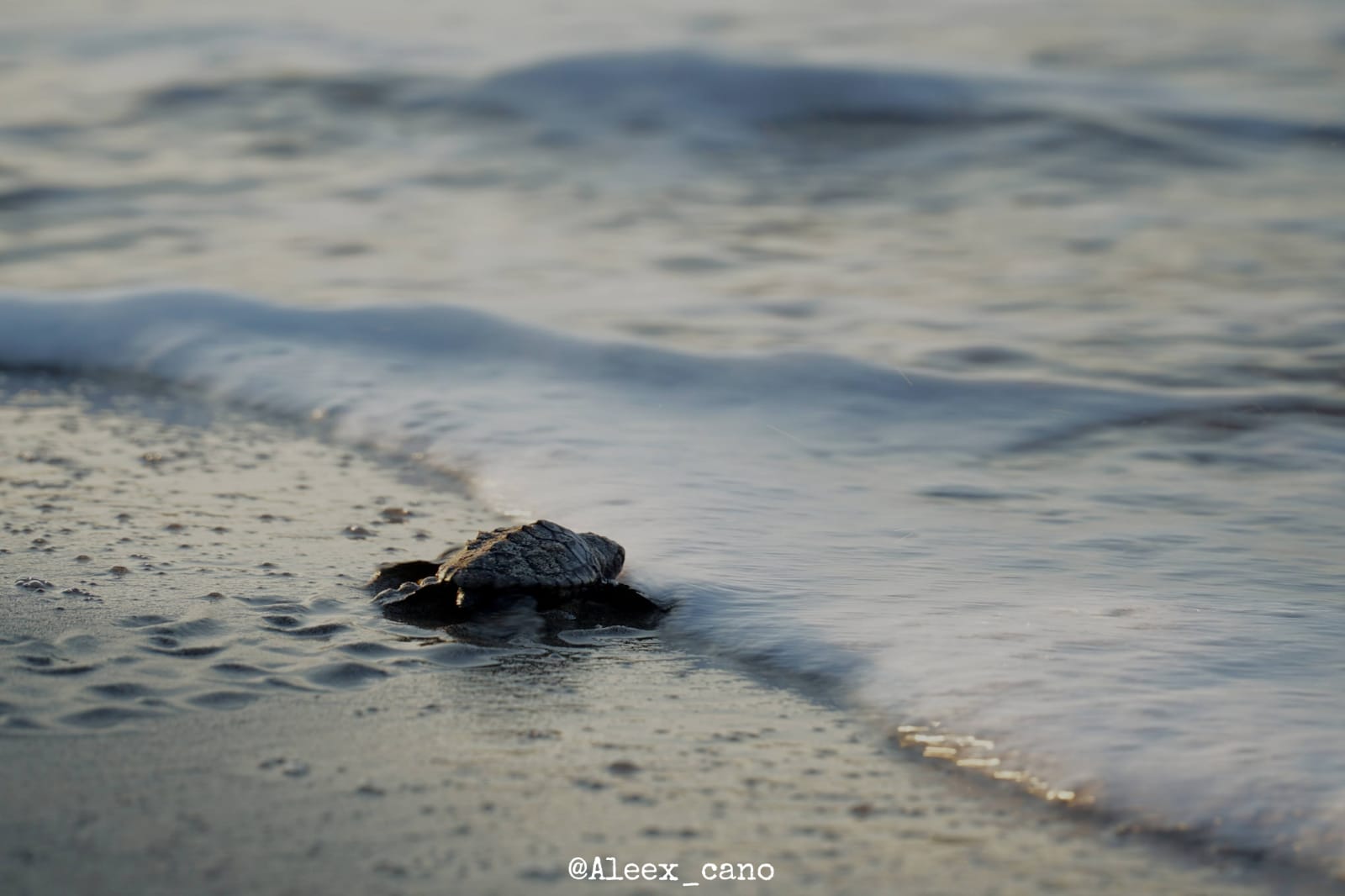
From this point on, they begin a long and solitary journey towards their development and feeding grounds. According to genetic studies, the juvenile turtles feeding in the Canaries come from nesting areas in Florida, Mexico and Cabo Verde. Can you imagine crossing the Atlantic Ocean and making such a long journey? And being only a few centimetres long!
After a few years they reach sexual maturity and become adults, ready to undertake great migrations again from feeding areas, such as the Canary Islands, to breeding grounds. After travelling thousands of kilometres and taking advantage of the main ocean currents to carry out their great migratory movements, they return to the beaches where they were born to prepare nests and bury their eggs. These animals certainly have an incredible sense of orientation. Mating takes place at sea, during the journey or in front of nesting beaches. After the breeding and egg-laying season, there is a new return journey to the feeding grounds, where they recover all their energy before starting the reproductive cycle again.
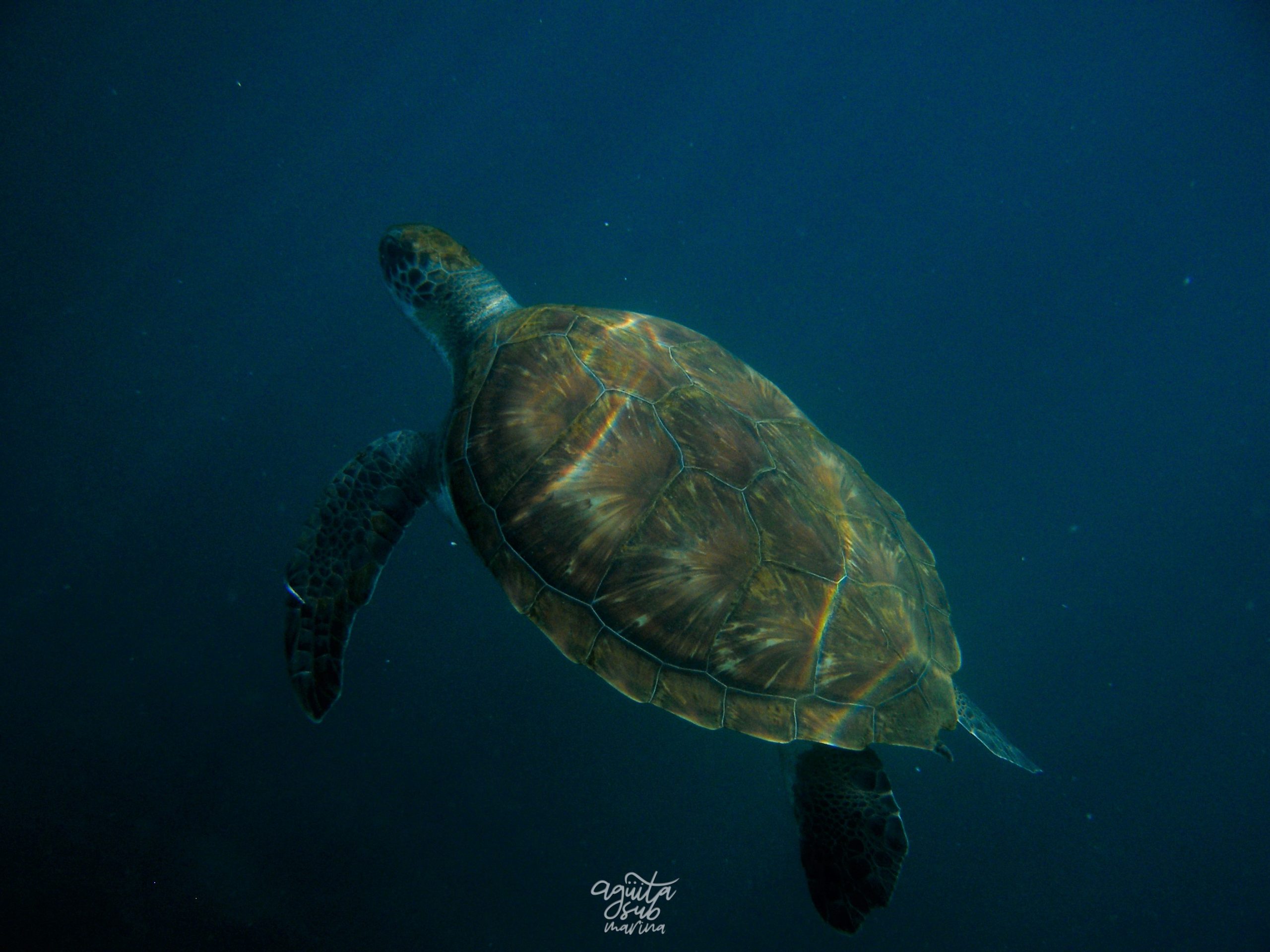
The rest of their lives consists of a continuous round trip between feeding and breeding areas, travelling across oceans and surfing along marine currents. Sounds fun, right?
Increasingly vulnerable to human activities
Despite having coexisted with dinosaurs and survived all kinds of human impacts, natural events and ecological adversity throughout history, it is now that their survival on the planet is being affected the most. According to updated data from the IUCN, six of the seven existing sea turtle species in the world are endangered (there are barely enough records to assess the conservation status of the flatback turtle).
Why is this happening?
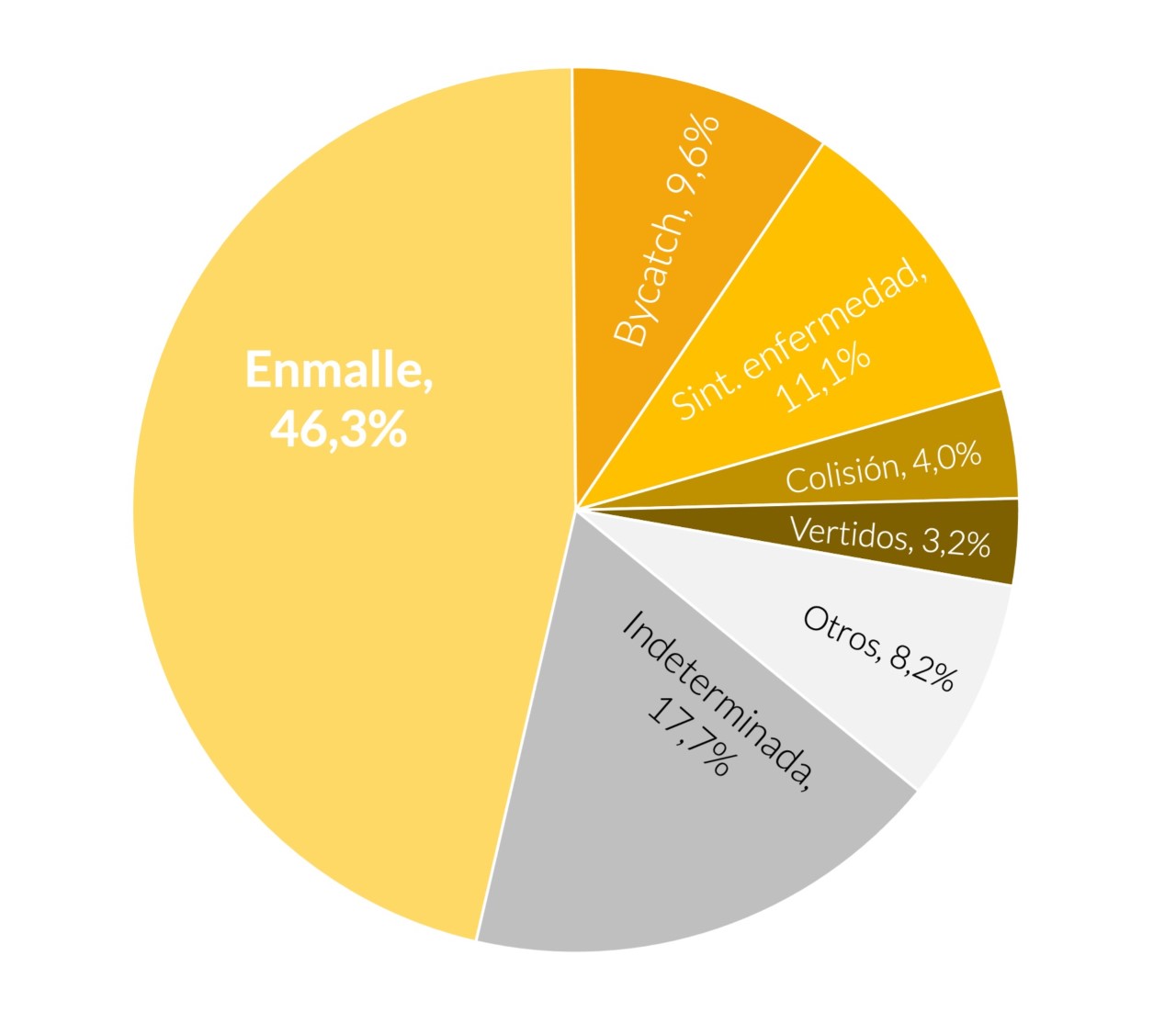
In the Canary Islands, of all the sea turtles that arrive at wildlife rehabilitation centres, 25% are admitted due to natural causes (shark bites, skin diseases, anaemia, etc.), while the remaining 75% correspond to injuries and accidents caused by human activities.
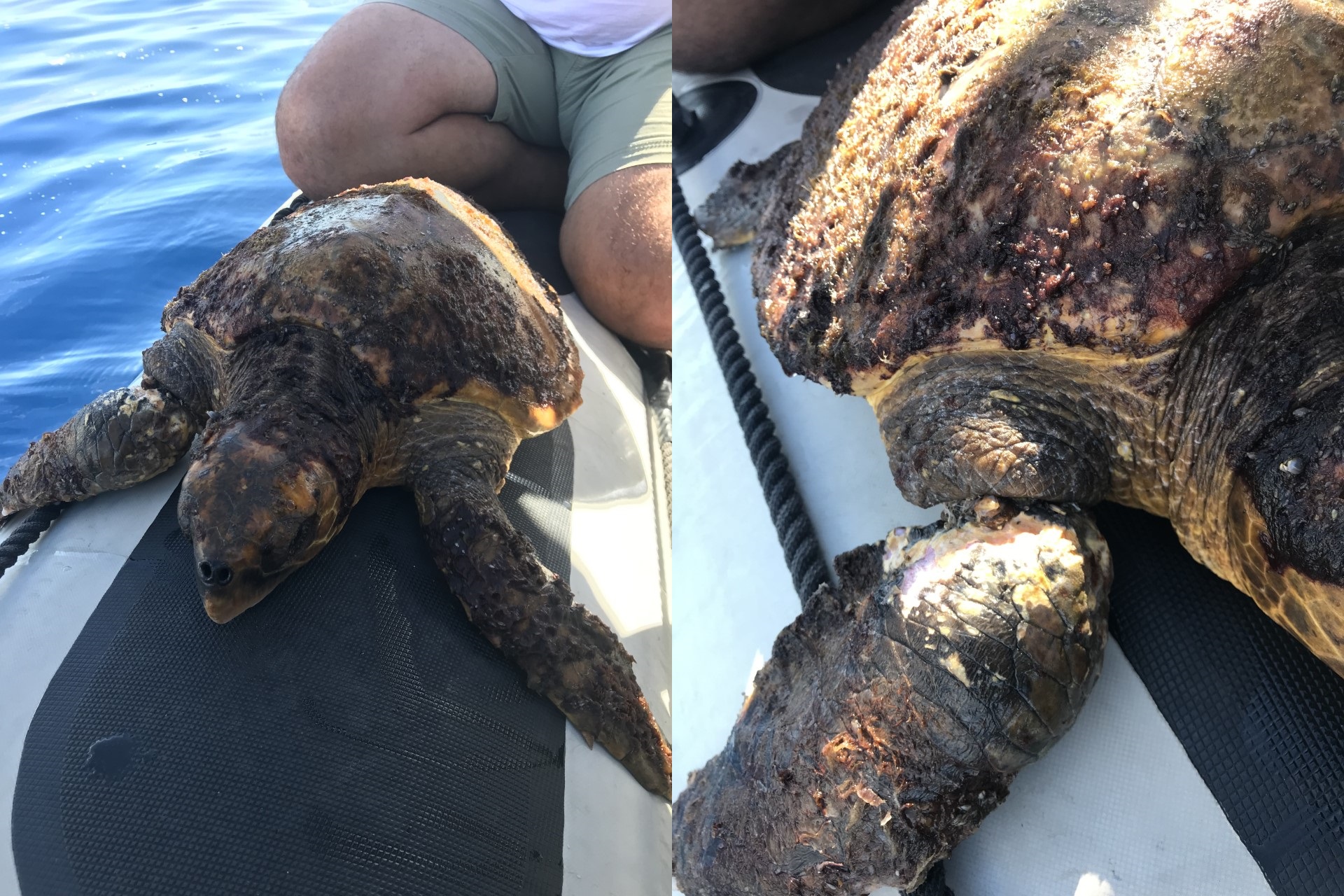
Of all these human pressures, the one causing the most injuries is entanglement in and ingestion of marine litter, affecting nearly 50% of the turtles stranded in the Canaries. Getting caught in abandoned fishing nets and other types of marine debris can cause necrotic injuries in the affected limbs, as well as prevent escape from predators or normal feeding. The second most common human cause of turtle admissions, affecting 9.6% of individuals, is trauma and injury caused by the ingestion of hooks and lines from accidental fishing, followed by poisoning from spills (3.2%) and collisions and run-overs by fishing and recreational vessels (4%).
Plastic: the main threat to Canary turtles
We know that turtles are excellent migrants and spend their lives crossing seas and oceans using marine currents. However, over time, these ocean currents have also begun transporting, along with marine life, millions of tonnes of plastic.
How much plastic do humans throw into the sea? The exact amount is unknown, but it is estimated to exceed 8 million tonnes per year and account for 80% of the waste found in seas and on beaches. At least 700 marine animal species are known to ingest plastic, from zooplankton to large whales. Some studies have shown that at least 43% of cetacean species and 36% of seabirds worldwide are affected. In the case of sea turtles, the seven species currently existing in the world have reported some kind of plastic-related impact.
Complete biodegradation can take more than 450 years, so during its long presence in the ocean it can harm or even kill many organisms through ingestion or entanglement, especially those unable to distinguish marine litter and that mistake plastic waste for food.
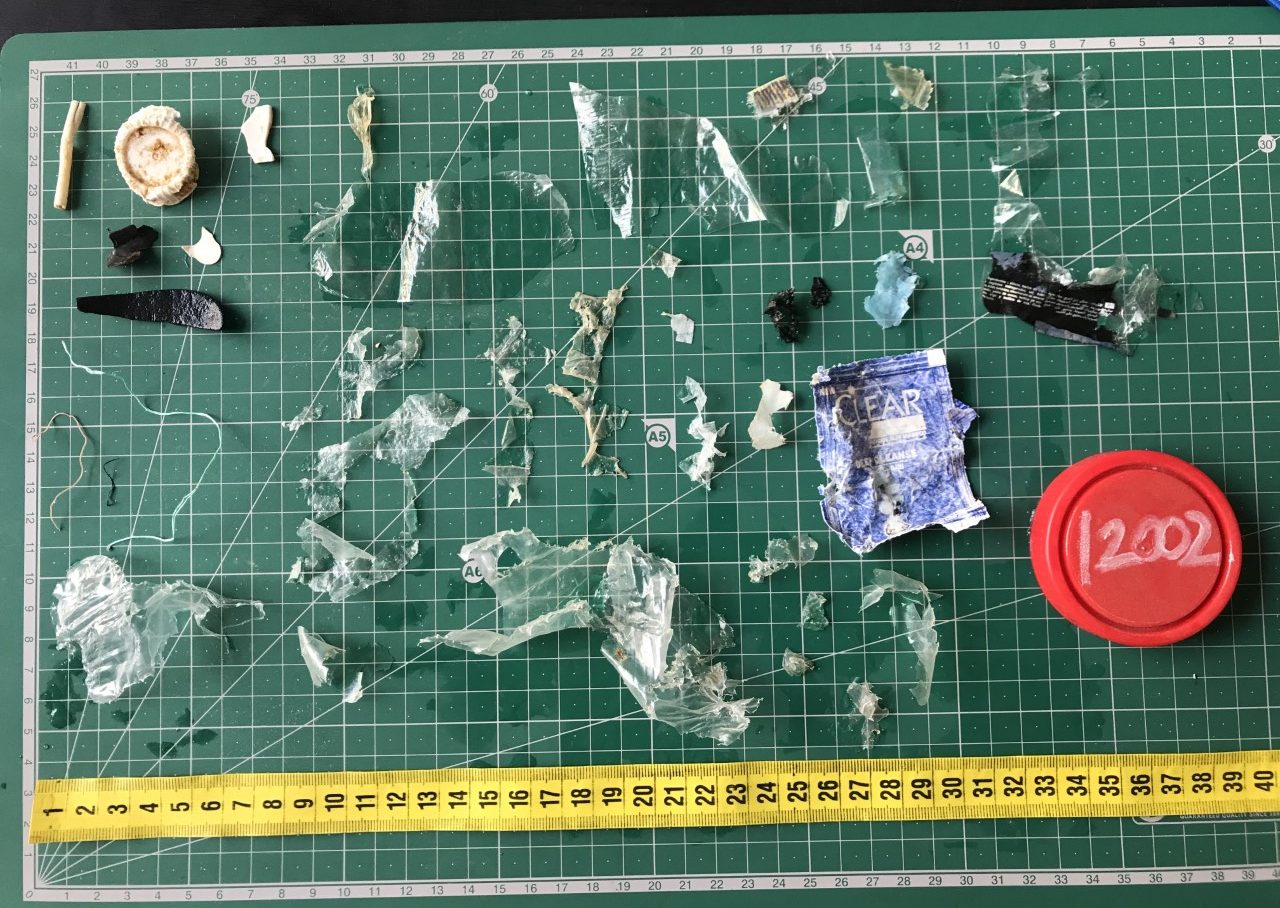
As a result of wave action, UV exposure and physical abrasion, the plastic transported by the sea breaks down into smaller pieces. Microplastics can also significantly affect turtle reproduction. The mixture of sand and plastics affects the internal temperature of the eggs, which can alter the male-to-female ratio, since sex determination depends on the incubation temperature.
The impact of plastic and its high potential to damage the marine environment have led it to be recognised as a global problem, and it is now included among the main threats to marine biodiversity.
The loggerhead turtle, a usual visitor on our trips
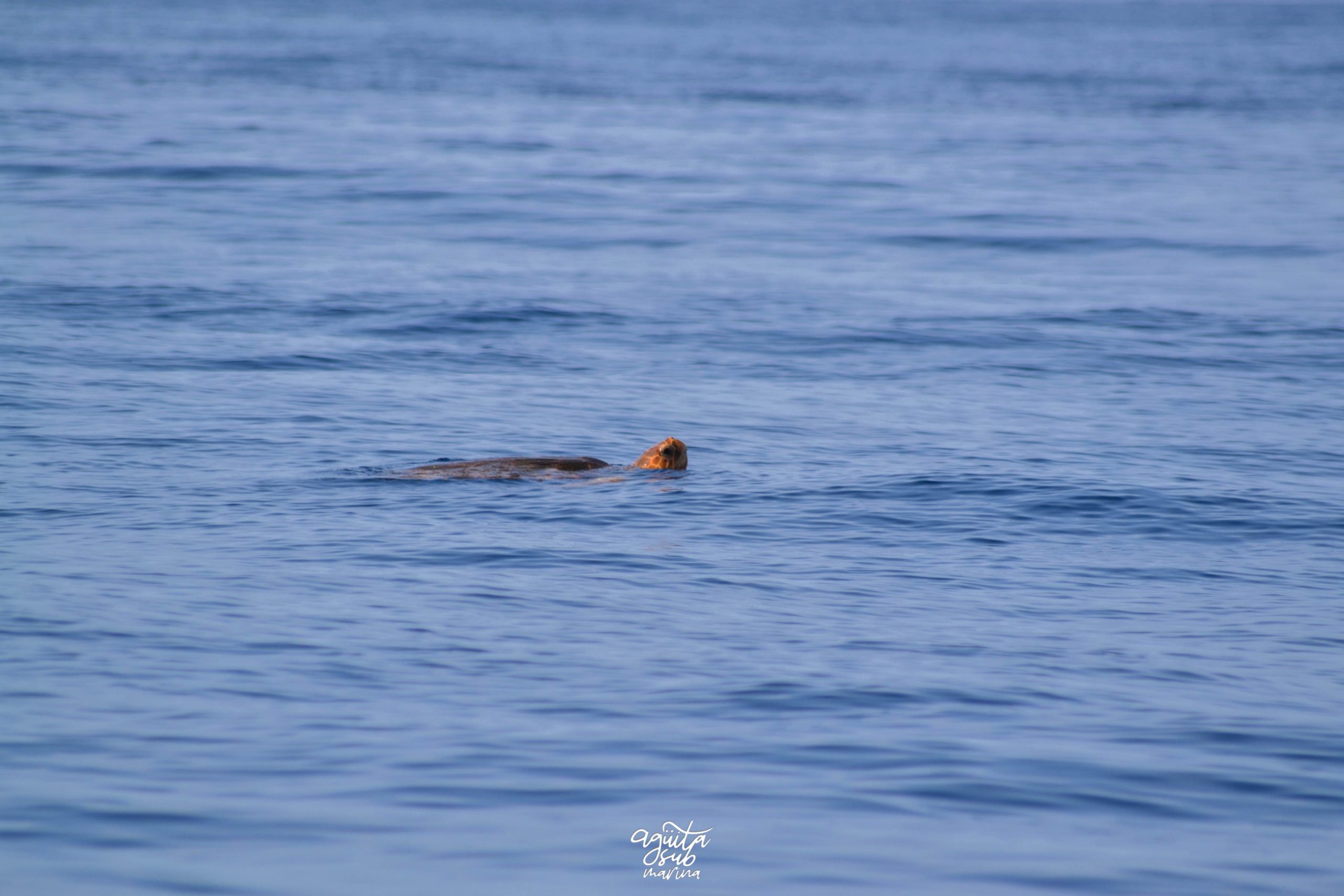
Between November 2019 and September 2021, we recorded a total of 151 interactions with turtles during our sightings, the vast majority of them loggerhead turtles. On our whale-watching trips, snorkelling excursions or diving trips, it is common to encounter at least one or two individuals of this species. Although at BIOSEAN Whale Watching & Marine Science we work for the conservation and protection of cetaceans, turtles and the rest of marine animals, not everyone acts appropriately.
Unfortunately, it is very common to see illegal activities and bad practices involving turtles. Some diving and snorkelling centres feed them to attract customers. Feeding or hand-feeding turtles is explicitly forbidden, as it causes severe metabolic disturbances and high levels of cholesterol and triglycerides in the blood. It also triggers changes in their behaviour, making them more vulnerable to boats and boat strikes. Mass excursions with tourists chasing and harassing turtles are also common. Therefore, if you hire any of these activities or excursions, make sure they are carried out with respect for the turtles and do not allow this kind of behaviour in your presence.
Over the last two years, at BIOSEAN we have managed to save the lives of numerous loggerhead turtles after finding them at sea in very poor condition. The latest was a juvenile loggerhead turtle with a fishing line entangled around one of its front flippers. After rescuing it and bringing it safely aboard the “Calderón”, the rescue team from the CRFS “La Tahonilla” took care of its treatment, recovery and rehabilitation. We are sure it will soon be ready to return to the sea and continue its journey!
In short, these humble, peaceful and wise creatures face many dangers. However, we are convinced that all is not lost yet. Although we cannot remove all plastic from the ocean, we still have the chance to reduce its volume and minimise its impact. Simple actions such as reduce, recycle and reuse can help these and many other marine species significantly. Will you join the change?
If you want to enjoy a turtle-friendly experience and learn more about these curious animals without giving up sustainability and respect for the sea, visit our website and come enjoy the marine world with BIOSEAN Whale Watching & Marine Science! Stay up to date with what is happening at sea through our social media channels: Instagram (@biosean_), Facebook, YouTube and LinkedIn.
See you soon in the great blue!